Buy daggershop.com ?
We are moving the project
daggershop.com .
Are you interested in purchasing the domain
daggershop.com ?
domain@kv-gmbh.de · 0541-91531010
Buy daggershop.com ?
How does a photodiode work?
A photodiode is a semiconductor device that converts light into an electrical current. When light strikes the photodiode, it generates electron-hole pairs in the semiconductor material. These pairs create a flow of current, which can be measured as a voltage output. The amount of current produced is directly proportional to the intensity of the light hitting the photodiode. This makes photodiodes useful for applications such as light detection, solar cells, and optical communications. **
How is a photodiode connected?
A photodiode is typically connected in reverse bias configuration, meaning the anode is connected to the negative terminal of the power supply and the cathode is connected to the positive terminal. This allows the photodiode to operate in the photoconductive mode, where it generates a current in response to light exposure. Additionally, a resistor is often connected in series with the photodiode to limit the current and prevent damage to the diode. Finally, the output of the photodiode can be connected to a load or measurement circuit to utilize the generated current. **

Similar search terms for Photodiode
Top-Angebote
Products related to Photodiode:
-
Uplifted Finds Advanced Tactical Combat Knee And Elbow Protective Pads Set 2 Pcs Elbow BlackTake control of your tactical outdoor routines and establish a flawless safety foundation across your combat gear configuration with this premium Advanced Tactical Combat Knee and Elbow Protective Pads Set. Masterfully engineered with an advanced...57,97 $*Shipping: 0,00 $Secure redirect to the provider
-
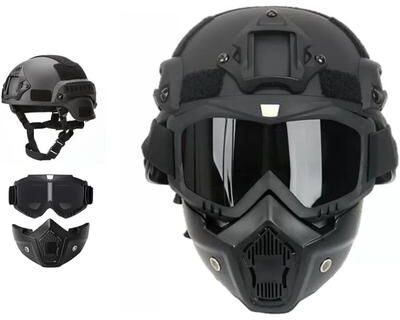
Perfect Picks Market Tactical Military Helmet Set Full Face Combat Helmet With Mask & Goggles For Airsoft Training & Outdoor Adventures Tactical Military Helmet Set Full Face Combat Helmet With Mask & Goggles For Airsoft Training & Outdoor AdventuresGear up for your next airsoft or outdoor adventure with the Tactical Military Helmet Set. Designed for those who value safety, style, and functionality, this set includes a full face combat helmet, a protective mask, and tactical goggles. Perfect...59,97 $*Shipping: 0,00 $Secure redirect to the provider
-
Combat Commander Battle Pack 8: Minor Nations, World War II Tactical Board Game Expansion by GMT GamesExpand your Combat Commander tabletop experience with Battle Pack 8: Minor Nations, a supplementary pack for owners of Combat Commander: Europe and Combat Commander: Mediterranean. This pack adds counters representing minor nations, along with new scenario content for use with the relevant core games. The contents include 44 half-inch weapon counters, 40 half-inch control markers, and 220 five-eighths-inch unit counters, as well as 8 scenario cards. The counters and scenario cards are designed for integration with the existing Combat Commander system. This is an expansion pack, so a compatible core title is required for play. It offers additional forces and scenarios for players looking to broaden their tactical World War II battles without purchasing the 20th Anniversary Edition. Please note that players should own either Combat Commander: Europe or Combat Commander: Mediterranean before ordering.29,18 £*Shipping: 3,95 £Secure redirect to the provider
-
Uplifted Finds Outdoor Steel Pheasant Hunting Whistle Bird Call Tool Outdoor Steel Pheasant Hunting Whistle Bird Call ToolBring realism and precision to your hunting experience with this outdoor steel pheasant hunting whistle. Designed to replicate authentic bird calls, this compact tool helps attract pheasants naturally while giving you better control in the field....55,97 $*Shipping: 0,00 $Secure redirect to the provider



-
What components does a photodiode need in electrical engineering?
In electrical engineering, a photodiode requires several components to function effectively. These include a semiconductor material, such as silicon, which is sensitive to light and capable of generating an electric current when exposed to photons. Additionally, a photodiode needs a p-n junction to create a depletion region, which allows for the separation of electron-hole pairs when light is absorbed. Furthermore, a photodiode typically requires a reverse bias voltage to create the necessary electric field for efficient operation. Finally, a photodiode may also need a protective housing to shield it from external factors such as temperature, humidity, and mechanical stress. **
-
What is the difference between a diode and a photodiode?
A diode is a two-terminal electronic component that allows current to flow in one direction only. It is commonly used in electronic circuits to control the direction of current flow. On the other hand, a photodiode is a type of diode that is designed to convert light into electrical current. Photodiodes are used in various applications such as light sensors, solar cells, and optical communications. The key difference between a diode and a photodiode is that a photodiode is specifically designed to detect and convert light into electrical current, whereas a diode is a more general electronic component used for controlling current flow. **
-
What is the difference between a photoelement and a photodiode?
A photoelement is a general term used to describe any device that converts light into an electrical signal, including photodiodes. A photodiode is a specific type of photoelement that operates in reverse bias, meaning it only allows current to flow when light is present. Photodiodes are commonly used in applications such as light detection, solar cells, and optical communication systems. In contrast, a photoelement can refer to a broader range of light-sensitive devices, including phototransistors, photoresistors, and photovoltaic cells. **
-
What are the different characteristics between a photodiode and a photoresistor?
Photodiodes are semiconductor devices that generate a current when exposed to light, offering a fast response time and high sensitivity to light intensity changes. They are more expensive and complex to use compared to photoresistors. Photoresistors, on the other hand, are passive components that change resistance based on the amount of light they are exposed to, providing a simple and cost-effective solution for light detection. They have a slower response time and are less sensitive to light compared to photodiodes. **

How can the light sensor (photodiode) be read out analog-digital?
The light sensor (photodiode) can be read out analog-digital by using an analog-to-digital converter (ADC). The photodiode generates a current or voltage signal in response to the incident light, which is then converted into a digital value by the ADC. The ADC samples the analog signal at regular intervals and quantizes it into discrete digital values, which can then be processed and analyzed by a microcontroller or computer. This digital output can be used to measure the intensity of the light and make decisions or trigger actions based on the light level. **
What is the difference between a photodiode, a phototransistor, and a photoresistor?
A photodiode is a semiconductor device that converts light into an electrical current. It operates in reverse bias mode and has a fast response time. A phototransistor is a type of transistor that is sensitive to light and amplifies the current flowing through it when exposed to light. It operates in active mode and is more sensitive than a photodiode. A photoresistor, on the other hand, is a passive component whose resistance changes in response to light intensity. It does not amplify the current like a phototransistor and is commonly used in light sensing applications. **
Top-Angebote
Products related to Photodiode:
-
Combat Commander: Europe 5th Printing, Card-Driven Tactical Board Game by GMT GamesCombat Commander: Europe is a card-driven tactical board game set in the European theatre of the Second World War. Players take command of infantry forces representing Germany, the United States, or the Soviet Union, competing across scenario-based battles. The game combines card play, tactical movement, and battlefield events. Players use cards to activate units, carry out military actions, and respond to changing circumstances on the map. Fate cards introduce unexpected developments, helping each battle unfold differently and requiring players to adapt their plans. This game features a card-driven tactical combat system, a World War II European theatre setting, and playable German, American, and Soviet forces. It's designed for competitive head-to-head play and is a physical tabletop game for players who enjoy detailed historical strategy and tactical decision-making.75,29 £*Shipping: 0,00 £Secure redirect to the provider
-
Uplifted Finds Advanced Tactical Combat Knee And Elbow Protective Pads Set 2 Pcs Elbow BlackTake control of your tactical outdoor routines and establish a flawless safety foundation across your combat gear configuration with this premium Advanced Tactical Combat Knee and Elbow Protective Pads Set. Masterfully engineered with an advanced...57,97 $*Shipping: 0,00 $Secure redirect to the provider
-
Perfect Picks Market Tactical Military Helmet Set Full Face Combat Helmet With Mask & Goggles For Airsoft Training & Outdoor Adventures Tactical Military Helmet Set Full Face Combat Helmet With Mask & Goggles For Airsoft Training & Outdoor AdventuresGear up for your next airsoft or outdoor adventure with the Tactical Military Helmet Set. Designed for those who value safety, style, and functionality, this set includes a full face combat helmet, a protective mask, and tactical goggles. Perfect...59,97 $*Shipping: 0,00 $Secure redirect to the provider
-
How does a photodiode work?
A photodiode is a semiconductor device that converts light into an electrical current. When light strikes the photodiode, it generates electron-hole pairs in the semiconductor material. These pairs create a flow of current, which can be measured as a voltage output. The amount of current produced is directly proportional to the intensity of the light hitting the photodiode. This makes photodiodes useful for applications such as light detection, solar cells, and optical communications. **
-
How is a photodiode connected?
A photodiode is typically connected in reverse bias configuration, meaning the anode is connected to the negative terminal of the power supply and the cathode is connected to the positive terminal. This allows the photodiode to operate in the photoconductive mode, where it generates a current in response to light exposure. Additionally, a resistor is often connected in series with the photodiode to limit the current and prevent damage to the diode. Finally, the output of the photodiode can be connected to a load or measurement circuit to utilize the generated current. **
-
What components does a photodiode need in electrical engineering?
In electrical engineering, a photodiode requires several components to function effectively. These include a semiconductor material, such as silicon, which is sensitive to light and capable of generating an electric current when exposed to photons. Additionally, a photodiode needs a p-n junction to create a depletion region, which allows for the separation of electron-hole pairs when light is absorbed. Furthermore, a photodiode typically requires a reverse bias voltage to create the necessary electric field for efficient operation. Finally, a photodiode may also need a protective housing to shield it from external factors such as temperature, humidity, and mechanical stress. **
-
What is the difference between a diode and a photodiode?
A diode is a two-terminal electronic component that allows current to flow in one direction only. It is commonly used in electronic circuits to control the direction of current flow. On the other hand, a photodiode is a type of diode that is designed to convert light into electrical current. Photodiodes are used in various applications such as light sensors, solar cells, and optical communications. The key difference between a diode and a photodiode is that a photodiode is specifically designed to detect and convert light into electrical current, whereas a diode is a more general electronic component used for controlling current flow. **
Similar search terms for Photodiode
-
Combat Commander Battle Pack 8: Minor Nations, World War II Tactical Board Game Expansion by GMT GamesExpand your Combat Commander tabletop experience with Battle Pack 8: Minor Nations, a supplementary pack for owners of Combat Commander: Europe and Combat Commander: Mediterranean. This pack adds counters representing minor nations, along with new scenario content for use with the relevant core games. The contents include 44 half-inch weapon counters, 40 half-inch control markers, and 220 five-eighths-inch unit counters, as well as 8 scenario cards. The counters and scenario cards are designed for integration with the existing Combat Commander system. This is an expansion pack, so a compatible core title is required for play. It offers additional forces and scenarios for players looking to broaden their tactical World War II battles without purchasing the 20th Anniversary Edition. Please note that players should own either Combat Commander: Europe or Combat Commander: Mediterranean before ordering.29,18 £*Shipping: 3,95 £Secure redirect to the provider
-
Uplifted Finds Outdoor Steel Pheasant Hunting Whistle Bird Call Tool Outdoor Steel Pheasant Hunting Whistle Bird Call ToolBring realism and precision to your hunting experience with this outdoor steel pheasant hunting whistle. Designed to replicate authentic bird calls, this compact tool helps attract pheasants naturally while giving you better control in the field....55,97 $*Shipping: 0,00 $Secure redirect to the provider
-
BattleTech Tactical Operations: Advanced Rules Rulebook by Catalyst Game Labs, Board Game Rules for On-World Combat and Planetary OperationsTake command of more complex BattleTech engagements with Tactical Operations: Advanced Rules, a comprehensive rulebook for players who want to expand the tactical possibilities of on-world combat. This reference introduces advanced battlefield situations and additional rules for varied planetary operations. Use challenging weather and severe environmental conditions to create demanding scenarios, then strengthen your battle plan with expanded options covering artillery, minefields, battlefield tactics, and command-level communications. Designed for BattleTech players and campaign organizers, this book provides a substantial rules reference for developing more detailed games and larger narrative operations. It is suited to adding depth and variety to existing BattleTech sessions rather than serving as a standalone game.30,69 £*Shipping: 3,95 £Secure redirect to the provider
-
What is the difference between a photoelement and a photodiode?
A photoelement is a general term used to describe any device that converts light into an electrical signal, including photodiodes. A photodiode is a specific type of photoelement that operates in reverse bias, meaning it only allows current to flow when light is present. Photodiodes are commonly used in applications such as light detection, solar cells, and optical communication systems. In contrast, a photoelement can refer to a broader range of light-sensitive devices, including phototransistors, photoresistors, and photovoltaic cells. **
-
What are the different characteristics between a photodiode and a photoresistor?
Photodiodes are semiconductor devices that generate a current when exposed to light, offering a fast response time and high sensitivity to light intensity changes. They are more expensive and complex to use compared to photoresistors. Photoresistors, on the other hand, are passive components that change resistance based on the amount of light they are exposed to, providing a simple and cost-effective solution for light detection. They have a slower response time and are less sensitive to light compared to photodiodes. **
-
How can the light sensor (photodiode) be read out analog-digital?
The light sensor (photodiode) can be read out analog-digital by using an analog-to-digital converter (ADC). The photodiode generates a current or voltage signal in response to the incident light, which is then converted into a digital value by the ADC. The ADC samples the analog signal at regular intervals and quantizes it into discrete digital values, which can then be processed and analyzed by a microcontroller or computer. This digital output can be used to measure the intensity of the light and make decisions or trigger actions based on the light level. **
-
What is the difference between a photodiode, a phototransistor, and a photoresistor?
A photodiode is a semiconductor device that converts light into an electrical current. It operates in reverse bias mode and has a fast response time. A phototransistor is a type of transistor that is sensitive to light and amplifies the current flowing through it when exposed to light. It operates in active mode and is more sensitive than a photodiode. A photoresistor, on the other hand, is a passive component whose resistance changes in response to light intensity. It does not amplify the current like a phototransistor and is commonly used in light sensing applications. **
* All prices are inclusive of VAT and, if applicable, plus shipping costs. The offer information is based on the details provided by the respective shop and is updated through automated processes. Real-time updates do not occur, so deviations can occur in individual cases. ** Note: Parts of this content were created by AI.