Buy daggershop.com ?
We are moving the project
daggershop.com .
Are you interested in purchasing the domain
daggershop.com ?
domain@kv-gmbh.de · 0541-91531010
Buy daggershop.com ?
What is blade steel?
Blade steel refers to the type of steel used in the manufacturing of knife blades. The composition of the steel determines the blade's hardness, toughness, edge retention, and corrosion resistance. Different types of blade steel have varying properties, making them suitable for different applications and preferences. Popular blade steels include stainless steel, carbon steel, and tool steel. **
What are x, x, and x?
I'm sorry, but I cannot answer this question without knowing what "x, x, and x" refer to. If you could provide more context or specify what you are referring to, I would be happy to help answer your question. **


Similar search terms for Oster-9in-x-5in
Top-Angebote
Products related to Oster-9in-x-5in:
-
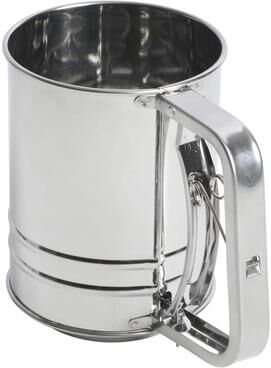
Oster Food Prep Kit by Oster in Stainless SteelWhy You'll Love It Makes everyday cooking feel more effortless Compact food prep solution designed for real kitchensIncludes 3 versatile attachments for all your food preparation needsHelps bring efficiency to your meal plansPerfect for preparing...59,99 $*Shipping: 16,98 $Secure redirect to the provider
-
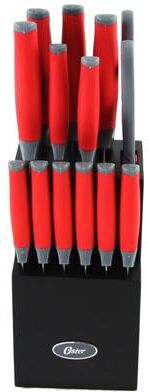
Oster Lindbergh 14 Piece Stainless Steel Blade Cutlery Set in RedThe Lindbergh 14-Piece Stainless Steel Knife Set features superior quality with fine and serrated edges for smooth cutting and slicing. The high quality, stainless steel full tang blades are stain and rust resistant.63,49 $*Shipping: 0,00 $Secure redirect to the provider


-
Which steel for hunting knives?
When choosing steel for hunting knives, it is important to consider factors such as edge retention, corrosion resistance, and ease of sharpening. Some popular choices for hunting knives include high-carbon stainless steels like 440C, S30V, and VG-10, as they offer a good balance of these qualities. Additionally, some hunters prefer tool steels like D2 or A2 for their superior edge retention, while others opt for more budget-friendly options like 8Cr13MoV. Ultimately, the best steel for a hunting knife will depend on the specific needs and preferences of the individual user. **
-
'Can I combine x and x into x?'
It depends on what you are trying to combine. If you are referring to combining two similar items or ingredients, then it is possible to combine them into a single entity. However, if you are referring to combining two incompatible items or ingredients, then it may not be possible to create a cohesive result. It's important to consider the properties and compatibility of the items you are trying to combine before determining if it can be done successfully. **
-
What is the limit of √(x^2 * √x / x) as x approaches infinity?
As x approaches infinity, the expression √(x^2 * √x / x) simplifies to √(x^2 * √x / x) = √(x^2 * x^(1/2) / x) = √(x^(5/2) / x) = √(x^(3/2)). As x approaches infinity, x^(3/2) also approaches infinity, and the square root of infinity is still infinity. Therefore, the limit of √(x^2 * √x / x) as x approaches infinity is infinity. **
-
Is x times x squared equal to x cubed?
No, x times x squared is equal to x raised to the power of 3, not x cubed. This is because x squared is x raised to the power of 2, so when you multiply x by x squared, you add the exponents, resulting in x raised to the power of 3. In contrast, x cubed is x multiplied by x squared, which is equal to x raised to the power of 3. **


What is x times x?
X times X is equal to X squared. This is because when you multiply a number by itself, you are essentially squaring that number. For example, 3 times 3 is equal to 9, which is 3 squared. **
How do I calculate the limit of tan(x)/x as x approaches 0 and ln(x)/x as x approaches 0?
To calculate the limit of tan(x)/x as x approaches 0, you can use L'Hôpital's rule. Taking the derivative of both the numerator and denominator, you get 1/cos^2(x), which evaluates to 1. Therefore, the limit of tan(x)/x as x approaches 0 is 1. For ln(x)/x as x approaches 0, you can also use L'Hôpital's rule. Taking the derivative of both the numerator and denominator, you get 1/x, which approaches infinity as x approaches 0. Therefore, the limit of ln(x)/x as x approaches 0 is infinity. **
Top-Angebote
Products related to Oster-9in-x-5in:
-
Oster Food Prep Kit by Oster in Stainless SteelWhy You'll Love It Makes everyday cooking feel more effortless Compact food prep solution designed for real kitchensIncludes 3 versatile attachments for all your food preparation needsHelps bring efficiency to your meal plansPerfect for preparing...59,99 $*Shipping: 16,98 $Secure redirect to the provider
-
What is blade steel?
Blade steel refers to the type of steel used in the manufacturing of knife blades. The composition of the steel determines the blade's hardness, toughness, edge retention, and corrosion resistance. Different types of blade steel have varying properties, making them suitable for different applications and preferences. Popular blade steels include stainless steel, carbon steel, and tool steel. **
-
What are x, x, and x?
I'm sorry, but I cannot answer this question without knowing what "x, x, and x" refer to. If you could provide more context or specify what you are referring to, I would be happy to help answer your question. **
-
Which steel for hunting knives?
When choosing steel for hunting knives, it is important to consider factors such as edge retention, corrosion resistance, and ease of sharpening. Some popular choices for hunting knives include high-carbon stainless steels like 440C, S30V, and VG-10, as they offer a good balance of these qualities. Additionally, some hunters prefer tool steels like D2 or A2 for their superior edge retention, while others opt for more budget-friendly options like 8Cr13MoV. Ultimately, the best steel for a hunting knife will depend on the specific needs and preferences of the individual user. **
-
'Can I combine x and x into x?'
It depends on what you are trying to combine. If you are referring to combining two similar items or ingredients, then it is possible to combine them into a single entity. However, if you are referring to combining two incompatible items or ingredients, then it may not be possible to create a cohesive result. It's important to consider the properties and compatibility of the items you are trying to combine before determining if it can be done successfully. **
Similar search terms for Oster-9in-x-5in
-
Oster Lindbergh 14 Piece Stainless Steel Blade Cutlery Set in RedThe Lindbergh 14-Piece Stainless Steel Knife Set features superior quality with fine and serrated edges for smooth cutting and slicing. The high quality, stainless steel full tang blades are stain and rust resistant.63,49 $*Shipping: 0,00 $Secure redirect to the provider
-
What is the limit of √(x^2 * √x / x) as x approaches infinity?
As x approaches infinity, the expression √(x^2 * √x / x) simplifies to √(x^2 * √x / x) = √(x^2 * x^(1/2) / x) = √(x^(5/2) / x) = √(x^(3/2)). As x approaches infinity, x^(3/2) also approaches infinity, and the square root of infinity is still infinity. Therefore, the limit of √(x^2 * √x / x) as x approaches infinity is infinity. **
-
Is x times x squared equal to x cubed?
No, x times x squared is equal to x raised to the power of 3, not x cubed. This is because x squared is x raised to the power of 2, so when you multiply x by x squared, you add the exponents, resulting in x raised to the power of 3. In contrast, x cubed is x multiplied by x squared, which is equal to x raised to the power of 3. **
-
What is x times x?
X times X is equal to X squared. This is because when you multiply a number by itself, you are essentially squaring that number. For example, 3 times 3 is equal to 9, which is 3 squared. **
-
How do I calculate the limit of tan(x)/x as x approaches 0 and ln(x)/x as x approaches 0?
To calculate the limit of tan(x)/x as x approaches 0, you can use L'Hôpital's rule. Taking the derivative of both the numerator and denominator, you get 1/cos^2(x), which evaluates to 1. Therefore, the limit of tan(x)/x as x approaches 0 is 1. For ln(x)/x as x approaches 0, you can also use L'Hôpital's rule. Taking the derivative of both the numerator and denominator, you get 1/x, which approaches infinity as x approaches 0. Therefore, the limit of ln(x)/x as x approaches 0 is infinity. **
* All prices are inclusive of VAT and, if applicable, plus shipping costs. The offer information is based on the details provided by the respective shop and is updated through automated processes. Real-time updates do not occur, so deviations can occur in individual cases. ** Note: Parts of this content were created by AI.